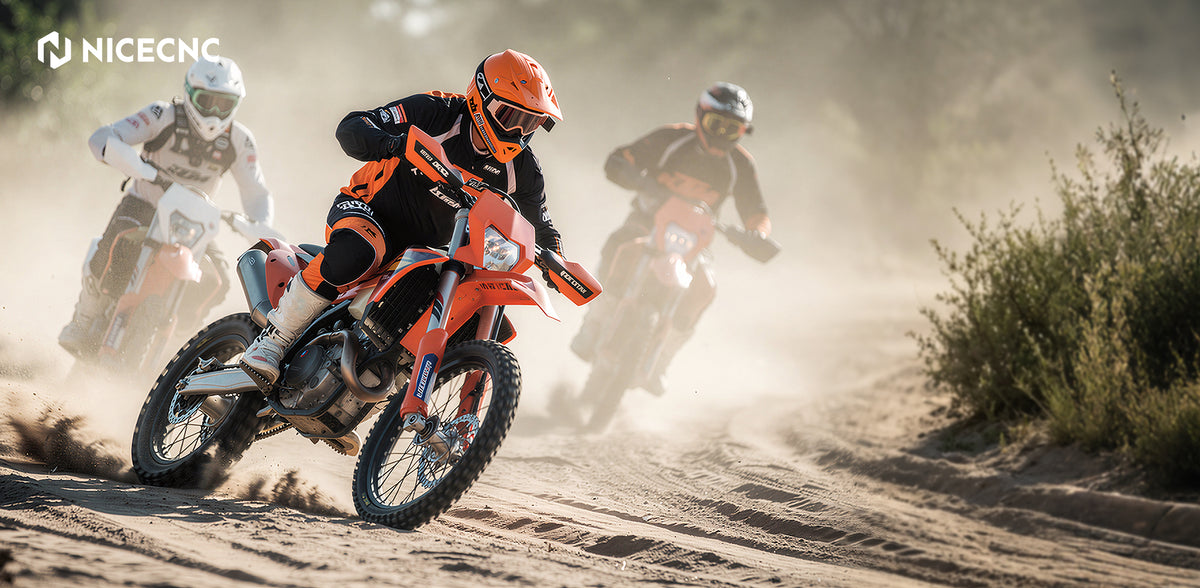
The KTM 390 and 890 Adventure reward different upgrade paths. Use this guide to choose the protection, control, comfort and touring parts that fit the way you actually ride.
Compare the KTM 390 and 890 Adventure—then build a smarter setup for your terrain, distance and load.
See how weight, power and travel use change what should come first, from navigation and foot controls to luggage, protection and cooling support.
KTM 390 Adventure vs 890 Adventure: built for different rides.
The 390 Adventure is light, approachable and well suited to commuting, back roads and gravel. The 890 brings more power, stability and load capacity for longer trips and tougher terrain.
Those differences change the upgrade order. The 390 benefits most from lightweight comfort, control and protection; the 890 puts greater demand on braking, luggage support and heat-sensitive areas.
Upgrade the parts that protect the bike, improve control and support the rides you take most often.
KTM 390 Adventure vs 890 Adventure: quick comparison.
Neither bike is simply “better.” The right choice depends on how much weight, speed, luggage and off-road intensity your rides involve—and the same is true for upgrades.
KTM 390 Adventure
Fully fueled weight based on KTM 390 Adventure R specification.
Start with navigation, standing comfort, brake feel and light protection around the case and engine sides.
KTM 890 Adventure
Fully fueled weight based on KTM 890 Adventure R specification.
Prioritize brake control, luggage support, stronger contact parts and cooling-related reliability.
| What the spec tells you | 390 Adventure upgrade logic | 890 Adventure upgrade logic |
|---|---|---|
| Lower weight and power | Keep upgrades light and practical. | Choose parts for heavier braking, load and impact. |
| Different touring range | Prioritize navigation and comfort. | Add luggage support and long-ride usability. |
| 21" / 18" ADV wheels | Protect common gravel contact points. | Increase protection as speed and terrain get harder. |
Specification note: The figures above use the KTM 390 Adventure R and KTM 890 Adventure R as reference models. Exact specifications and product fitment can vary by model year and trim.
What should you upgrade first on a KTM Adventure?
You do not need every accessory at once. Start with the areas you touch most, load most or are most likely to expose on your usual routes.
Brake contact points
More confidence in boots, while standing and on loose descents.
Case and sprocket area
Useful coverage against debris, gravel and low-speed impacts.
Navigation position
Keeps directions easier to read on daily rides and tours.
Handlebar comfort
Improves the transition between seated and standing control.
Luggage support
Becomes essential as trip distance and load increase.
Cooling areas
Worth checking for slow trails, summer traffic and loaded climbs.
Best first upgrades for KTM 390 Adventure.
Keep the 390 light and useful. The best first upgrades improve navigation, standing control, brake contact and protection around vulnerable areas.
Start with navigation, not horsepower.
The 390 often moves from city streets to back roads and gravel in one ride. A stable GPS or phone position keeps directions closer to the rider’s line of sight without cluttering the cockpit.


Make standing control feel natural.
On loose ground, confidence comes from body position. Better handlebar height and foot placement can make the move between seated and standing riding feel far more natural.
Protect the contact points that hit first.
Most gravel damage starts small: a boot misses the pedal, debris reaches the chain area or a slow drop exposes the engine side. A brake pedal, case saver and wider pegs target those everyday risks without turning the 390 into a heavy touring build.


Best first upgrades for KTM 890 Adventure.
The heavier, more powerful 890 asks more from its brakes, controls and support hardware—especially when luggage, passengers or rough terrain enter the ride.
On the 890, brake control carries more weight.
More speed and mass make rear-brake control more important, especially with luggage or on loose descents. A stronger, more adjustable pedal and shift setup is a practical early upgrade—not just a visual one.


Long-distance riding changes the upgrade list.
Multi-day riding quickly turns luggage support into a handling issue. A secure rear rack helps keep the load stable and gives touring gear a cleaner foundation.
Cooling matters when the ride slows down.
Slow trails, summer traffic and loaded climbs can build heat even when speed is low. Cooling-related parts should be chosen for durability and maintenance access, not unrealistic power claims.

Finish with the details the rider touches every mile.
The pieces riders touch and use every mile matter on long trips. A clear GPS position, comfortable levers and chain-area protection can make the 890 easier to manage before problems occur.


What about the KTM 790, 1290 and 1390 Adventure?
The same principle applies across the KTM Adventure range: smaller bikes favor light control and comfort upgrades, while larger models place more demand on braking, luggage, cooling and protection.
For the 790, 1090, 1190, 1290 and 1390, always confirm the exact year and trim before ordering.
Which KTM Adventure upgrades match your riding style?
KTM 390 Adventure vs 890 Adventure FAQ.
Q1: Is the KTM 390 Adventure a good first adventure bike?
Yes. Its lower weight and approachable power make it practical for commuting, back roads and light gravel. Keep the first upgrades simple: navigation, ergonomics, brake contact and case-area protection.
Q2: Can the KTM 390 Adventure handle highway and gravel riding?
Yes, especially on mixed routes. Riders who regularly carry heavy luggage, ride two-up or spend long days at higher speeds may prefer the extra power and stability of the 890.
Q3: Should I choose the KTM 390 or 890 Adventure?
Choose the 390 for lower weight, lower cost and easier low-speed control. Choose the 890 for longer highway days, more luggage, faster gravel and tougher off-road use.
Q4: What is the difference between the KTM 890 Adventure and 890 Adventure R?
The standard 890 leans more toward road touring, while the R is more off-road focused. Product fitment can differ, so check the exact year and trim before ordering.
Q5: What should I upgrade first on a KTM 390 Adventure?
Start with a GPS or phone mount, handlebar risers, wider foot pegs, rear brake pedal and case saver. These improve control and protection without adding unnecessary weight.
Q6: What should I upgrade first on a KTM 890 Adventure?
Begin with brake and shift controls, luggage support, navigation position, levers and chain-area protection. Cooling-related parts become more relevant for heat, slow trails and loaded travel.
Q7: Are KTM 790 and 890 Adventure parts interchangeable?
Some parts are shared, but not all. Check model year, Adventure/R/S/Rally trim and the fitment notes on each product page.
Q8: Is this a performance-upgrade guide?
No. It focuses on practical protection, control, comfort, navigation, luggage support and cooling before power-focused modifications.
Final verdict: KTM 390 or 890 Adventure?
Choose the KTM 390 Adventure for a lighter, easier bike built around commuting, back roads and light gravel. Its strongest first upgrades improve navigation, ergonomics, foot control and basic protection.
Choose the KTM 890 Adventure for more luggage, highway distance, faster gravel and harder terrain. Prioritize brake control, support hardware, rider contact points and cooling reliability.
The best setup is not the longest parts list—it is the one matched to the terrain, distance and load you actually ride.